

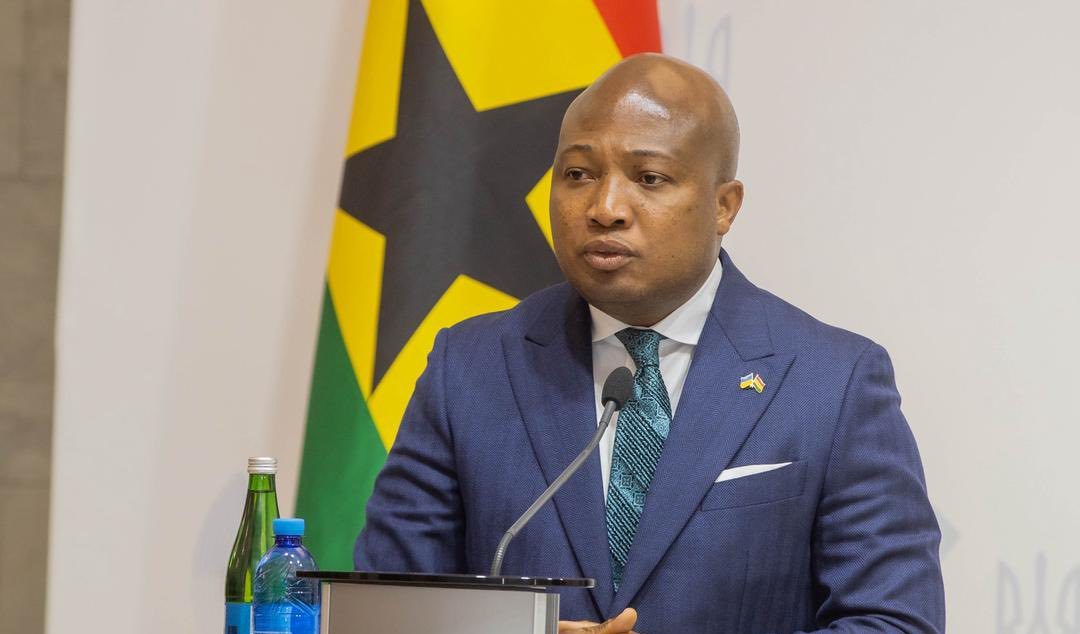
Ghana’s Minister for Foreign Affairs, Samuel Okudzeto Ablakwa, has criticised the United States for voting against a United Nations resolution recognising the transatlantic slave trade as the “gravest crime against humanity,” describing the move as a missed opportunity for reparative justice.
Speaking on the BBC’s Focus on Africa on Friday, March 27, Ablakwa said the decision denied the US a chance to acknowledge its historical role in the slave trade and demonstrate remorse. “The USA voting against is most disappointing because they know their role in this; they took part in the horrendous atrocities that happened,” he stated, adding that the vote undermined efforts toward global accountability and reconciliation.
He urged Washington to reconsider its position, stressing that Ghana and its partners remain open to engagement. “Ghana’s message to the Trump administration is that you missed a golden opportunity, but it is not too late. The resolution has been passed. You now have another chance to join this broad international coalition,” he said, noting that such collaboration would help dismantle systemic racism and address the enduring legacy of slavery.
The resolution, presented by Ghana at the United Nations General Assembly, calls for renewed global commitment to reparatory justice for African nations and descendants of enslaved people. It urges member states to engage in structured dialogue and implement concrete measures to address the long-term social, economic and cultural consequences of slavery.
After extensive deliberations, the motion secured 123 votes in favour, with the United States, Argentina and Israel voting against, while 52 countries abstained. The US described the resolution as “highly problematic,” acknowledging the historical injustice of slavery but raising concerns over the scope and intended beneficiaries of reparations.
Ablakwa emphasised that broader international support for the resolution reflects growing global recognition of the need to confront historical injustices. According to advocates, reparatory justice could include financial compensation, institutional reforms, educational initiatives and policies aimed at reducing inequalities rooted in the transatlantic slave trade.
The debate over reparations has gained renewed momentum in recent years, particularly within Africa and the Caribbean, where leaders argue that the legacy of slavery continues to shape development outcomes. Ghana has positioned itself at the forefront of this conversation, promoting initiatives such as the “Year of Return” and “Beyond the Return” campaigns to reconnect the African diaspora and highlight historical injustices.
Ablakwa maintained that while the US vote was disappointing, it does not end the conversation, insisting that continued diplomatic engagement will be key to building a broader global consensus on reparatory justice.
