

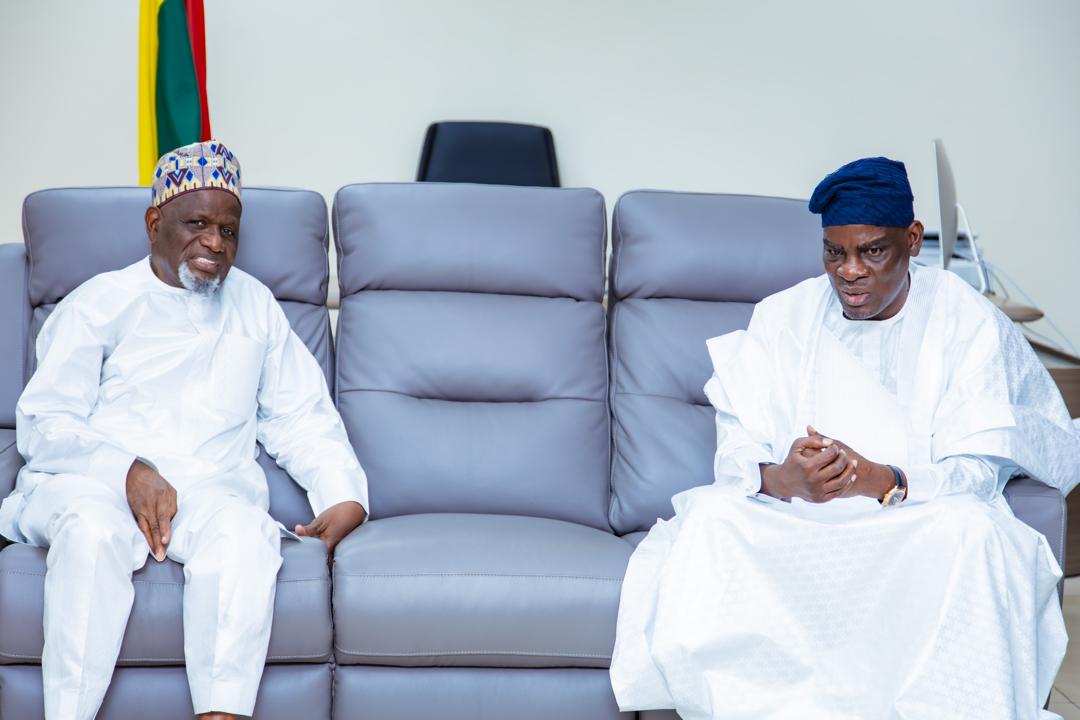
Ahmadiyya Mission praises Haruna Iddrisu’s leadership during courtesy visit
The Head and Missionary-in-Charge of the Ahmadiyya Muslim Mission, Maulvi Mohammed Bin Salih, has expressed strong confidence in the leadership credentials of Ghana’s Minister for Education, Haruna Iddrisu, describing his style as one with the potential for greater national impact.
Speaking during a courtesy call on the Minister in Accra on Wednesday, the respected Islamic cleric commended Mr. Iddrisu for what he described as a rare blend of humility, accessibility and dedication to public service. According to him, such qualities are essential in building public trust in governance, particularly at a time when citizens are increasingly demanding accountability and responsiveness from leaders.
“Leadership that resonates with the people is one that listens, engages and delivers,” Maulvi Bin Salih noted, adding that Mr. Iddrisu’s ability to connect with ordinary Ghanaians continues to inspire confidence across different segments of society.
The visit by the Ahmadiyya delegation also served as an opportunity to commiserate with the Minister following a recent road accident he was involved in while travelling to Wa in the Upper West Region on official duty. Mr. Iddrisu had been scheduled to attend the graduation ceremony of the Nusra Jahan Ahmadiyya College of Education as a special guest.
The Ahmadiyya Muslim Mission, known for its long-standing contributions to education and healthcare in Ghana, currently operates a wide network of schools and health facilities across the country. Through its Nusra Jahan programme, the mission has established dozens of basic and secondary schools, as well as colleges of education, particularly in underserved communities.
Education stakeholders say partnerships between faith-based organisations and government remain critical to improving Ghana’s education system. According to data from the Ministry of Education (Ghana), faith-based institutions, including the Ahmadiyya Mission, manage a significant proportion of public schools in Ghana, especially at the basic level.
Ghana’s education sector continues to face challenges such as infrastructure deficits, teacher shortages and disparities in access between urban and rural areas. Recent reports indicate that while enrolment at the basic level remains above 90%, concerns persist over learning outcomes, with studies by the World Bank suggesting that many students struggle with foundational literacy and numeracy skills.
Against this backdrop, Maulvi Bin Salih emphasized the importance of strong leadership at the Education Ministry, noting that effective policy direction and stakeholder collaboration are key to addressing these systemic challenges.
Mr. Iddrisu, who has previously served in several high-profile government roles, including as Minority Leader in Parliament, is expected to play a pivotal role in shaping policies aimed at improving quality, access and equity in the education sector.
The courtesy call underscores the continued engagement between government and religious bodies in national development, particularly in areas such as education, where collaborative efforts are seen as essential to achieving sustainable progress.
