
News
SIGA STRENGTHENS CORPORATE GOVERNANCE TO DRIVE ECONOMIC STABILITY
September 1, 2026
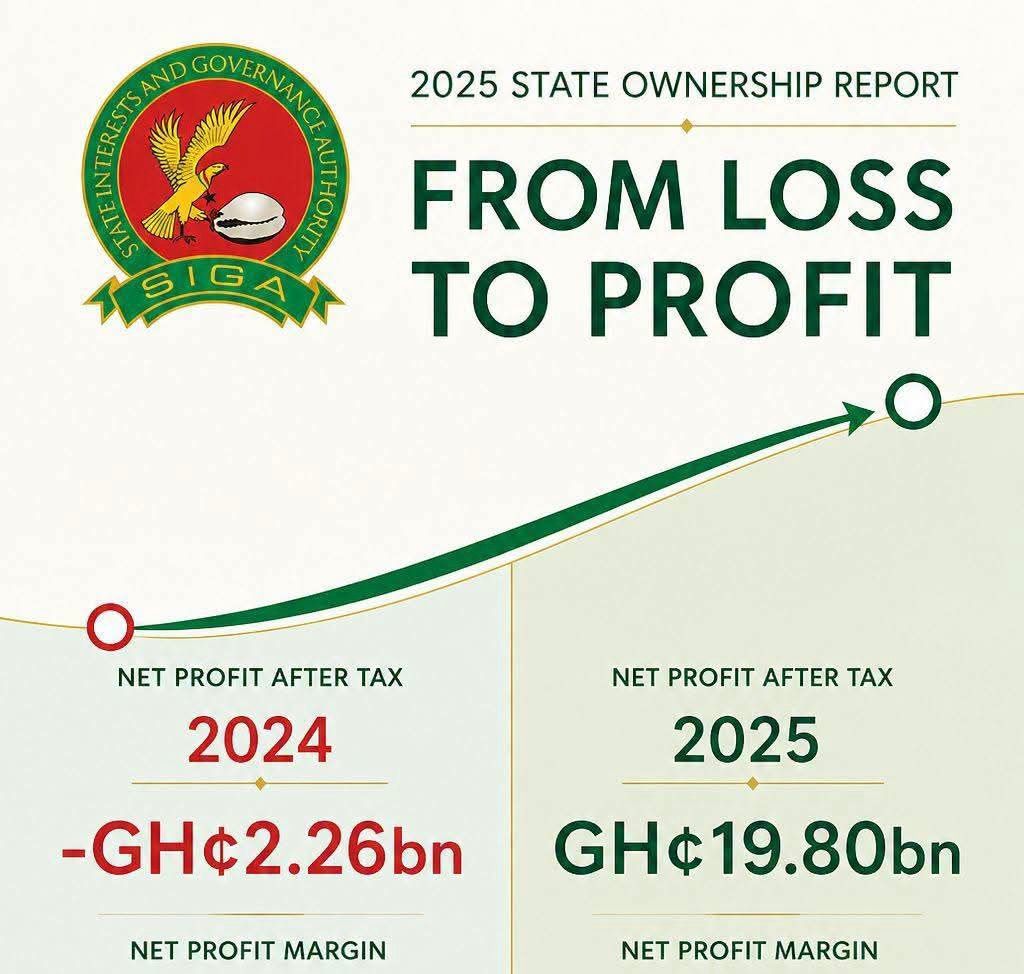
The Director-General of the State Interests and Governance Authority, SIGA, Professor Michael Kpessa-Whyte, has attributed the improved performance of some state-owned enterprises to stronger corporate governance, leadership and a more stable economic environment.
His comments follow SIGA’s latest report on the performance of State-Owned Enterprises, Other State Entities and Joint Ventures under its supervision.
Professor Kpessa-Whyte noted that entities in which the state holds minority interests have generally performed better than those in which government has majority ownership.
He said SIGA has identified the disparity as one of the factors requiring action to improve efficiency and strengthen corporate governance in the management of state investments.
According to him, the turnaround in the performance of several entities also coincided with improved economic conditions and stronger oversight from government.
Professor Kpessa-Whyte cited a meeting between President John Mahama and the CEOs of specified entities under SIGA in March 2023, where the President reportedly gave clear directives for improved efficiency and accountability.
He said the President subsequently maintained pressure on state entities, particularly those that failed to submit audited and management accounts.
The SIGA Director-General also attributed the improved performance to the broader economic environment, including declining inflation and greater stability in the exchange rate.
He explained that a more predictable economic environment enabled managers of state-owned entities to plan and operate more effectively, ultimately reflecting in their financial and operational performance.
Professor Kpessa-Whyte therefore identified strong leadership, improved corporate governance and economic stability as key factors behind the positive changes recorded in the latest SIGA report.
He said SIGA will continue to take steps to ensure that state investments are managed more efficiently and according to sound corporate governance principles.
By Kukua Snead-Michaels